
Financial Due Diligence
Financial due diligence consists in analyzing in depth the economic, accounting and fiscal situation of a company in order to assess its real performance, the quality of its results and the sustainability of its cash flows.
It makes it possible to identify potential risks, anomalies or elements that are likely to affect the value of the company before a strategic operation: acquisition, sale, fund raising or restructuring.



What is financial due diligence?
Financial due diligence makes it possible to assess the quality of results, the recurrence of performances and the normalization of a company's profitability. It aims to identify the main levers for creating or destroying value, to make the financial aggregates used in the transaction reliable, and to secure the decision-making of investors and managers.
The objective is twofold: Validate the reliability of financial information and anticipate risks that may affect the transaction.
STEP 1
Vision and Planning
Define the rationale, objectives, scope and schedule of the mission.
STEP 2
Information Gathering
Gather and structure the data required for analysis.
STEP 3
Performance and Situation
Evaluate past performance and current financial situation.
STEP 4
Reliability of the forecasts
Test the consistency and robustness of the projections.
STEP 5
Risks and Performance
Prioritize risks and value performance levers.
STEP 6
Analysis and Decision
Present the findings and their implications.
When and why should financial due diligence be carried out?

Before an acquisition
An purchaser carries out financial due diligence to ensure that the financial statements accurately reflect the economic reality of the target. The objective is to verify real profitability, debt level, working capital risks and validate valuation hypotheses before formulating a firm offer.

Before a transfer
The seller mandates financial due diligence prior to the transaction in order to anticipate questions from buyers and secure the sales process. This verification makes it possible to identify sensitive points, to make the aggregates communicated reliable and to reinforce the credibility of the transfer file.

fundraiser
A start-up or an SME wishing to open its capital to investors must provide
clear and audited financial information. Here, you have to give confidence to investors,
demonstrate financial control and facilitate the negotiation of shareholders' agreements.

Restructuring & Refinancing
When a company goes through a period of instability or renegotiates its debts, financial due diligence may be required by creditors or shareholders in order to assess the viability of the recovery plan and to measure the repayment capacity.

Before an IPO
Market authorities and investors expect full transparency before a company is admitted to a regulated market in order to ensure the reliability of historical and forecast data communicated to the market.

Entry/exit of a shareholder
Highlight non-recurring and seasonal elements to strengthen the reliability of the conclusions and strengthen the transparency of the analysis.
Ensuring the reliability of financial statements
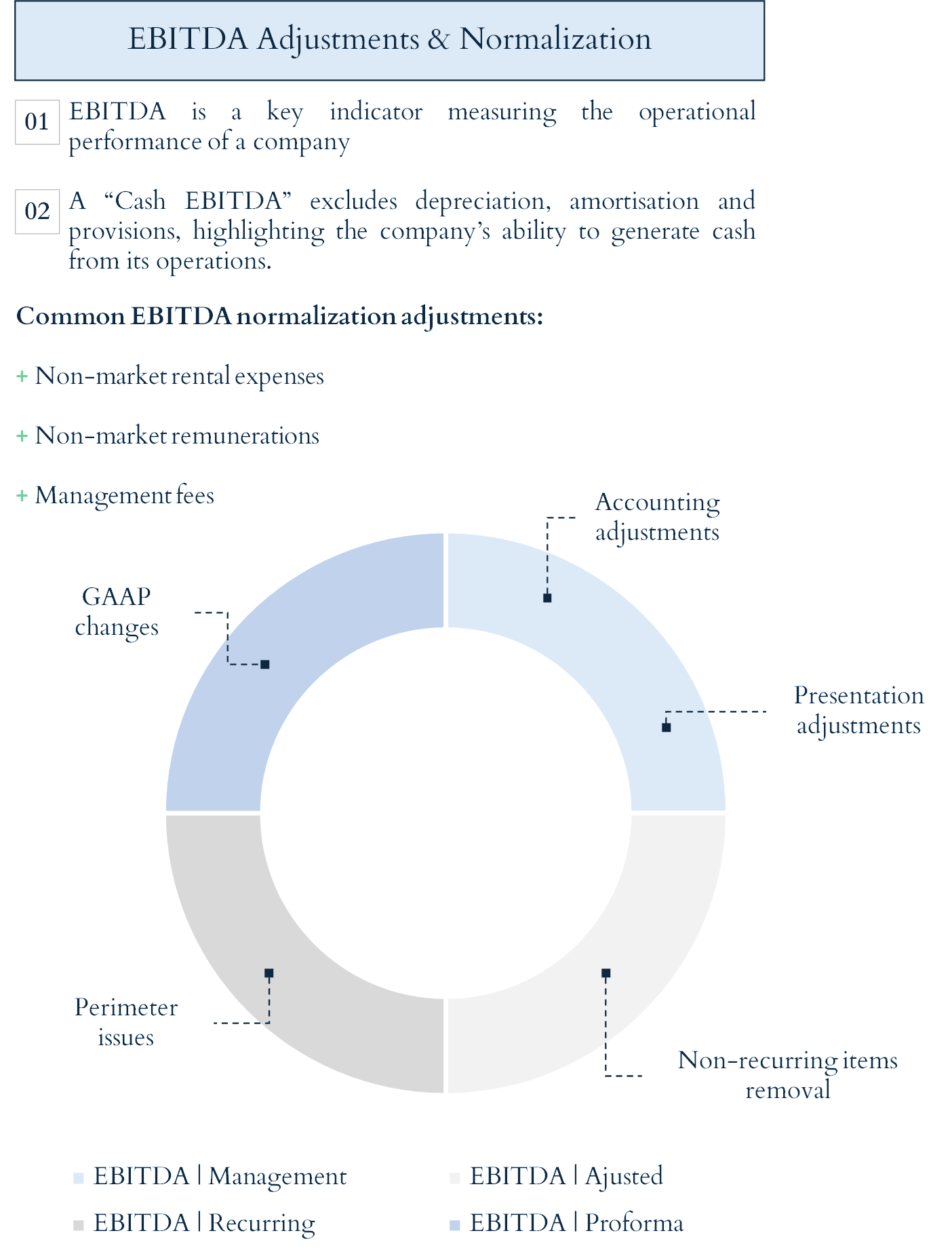
Beyond the analysis of financial aggregates, financial due diligence requires a detailed understanding of the scope of analysis and the adjustments necessary to accurately reflect the real economic performance of a company. Certain technical issues can significantly influence the interpretation of accounts and the valuation of a company.
Key adjustments and areas of vigilance include:
- Perimeter problem:
verifying the exact scope of consolidation and identifying entities, subsidiaries, or activities to include or exclude from the analysis. - Change in accounting framework (GAAP):
Comparison between local principles (Swiss GAAP RPC, French GAAP, etc.) and IFRS standards in order to identify discrepancies affecting equity or results. - Adjustment of the presentation of accounts:
Restatement of balance sheet and income statement items to properly reflect working capital requirements (WCR), net cash flow and normative financial aggregates. - Accounting adjustments:
error corrections, reclassifications or homogenizations necessary to ensure the consistency and comparability of financial data between periods. - Reprocessing of non-recurring items:
neutralization of exceptional income and expenses (disputes, subsidies, subsidies, restructuring, asset sales, etc.) in order to calculate a Normative EBITDA representative of recurring performance.
Diverse range of clients advised
Family Offices
Executives/Management
Family shareholders
Private equity funds
Family businesses
SMES

operations analyzed
years of expertise
clients advised
Discover our TRACK RECORD
The transactions presented were carried out by, with the contribution of, or with the participation of members of the Hectelion team in the context of functions performed currently or previously.
Frequently Asked Questions
- Accountant : checks the compliance of the accounts;
- Financial : assesses real performance, cash flow, restatements
At Hectelion, we favor a value-oriented due diligence. That means we don't just check the numbers. It is an approach that is more strategic and economic than purely accounting.
To identify financial, accounting and fiscal risks before signing and to adjust the purchase price.
The buy-side aims to secure the purchaser, the sell-side prepares the company for sale by anticipating sensitive points.
Historical financial statements, profitability, cash flow, debt, commitments and the quality of the result.
Between 3 and 6 weeks depending on the size, complexity and availability of the data.
Adjustments to working capital, net debt or non-recurring items directly influence enterprise value.
Unaudited figures, insufficient provisions, WCR inconsistencies or poorly documented restatements.
No It also includes the analysis of accounting processes, key contracts, and internal control.
The first assesses financial performance and structure, the second identifies potential tax risks.
To ensure the neutrality of the analysis, the conformity of the report and the reliability of the conclusions.