Geopolitical Risk and Business Valuation: How Macro Shocks Affect Company Values
Geopolitical crisis, oil shock and the Strait of Hormuz blockade
Introduction: when geopolitics enters your valuation calculation
Can a decision taken in a strait 6,000 kilometres from Geneva or Lyon wipe out several million from your company's value? The answer, counterintuitive for many business owners, is yes. Geopolitical risk refers to the economic uncertainty caused by tensions between states, conflicts, sanctions or supply disruptions, and its influence on markets is now measurable with precision thanks to the reference index built by economists at the US Federal Reserve (see the GPR index by Caldara and Iacoviello).
“We present a news-based measure of adverse geopolitical events and associated risks. The geopolitical risk index spikes around the two world wars, at the beginning of the Korean War, during the Cuban Missile Crisis, and after 9/11.” Caldara, D. & Iacoviello, M. (2022), Measuring Geopolitical Risk, American Economic Review.
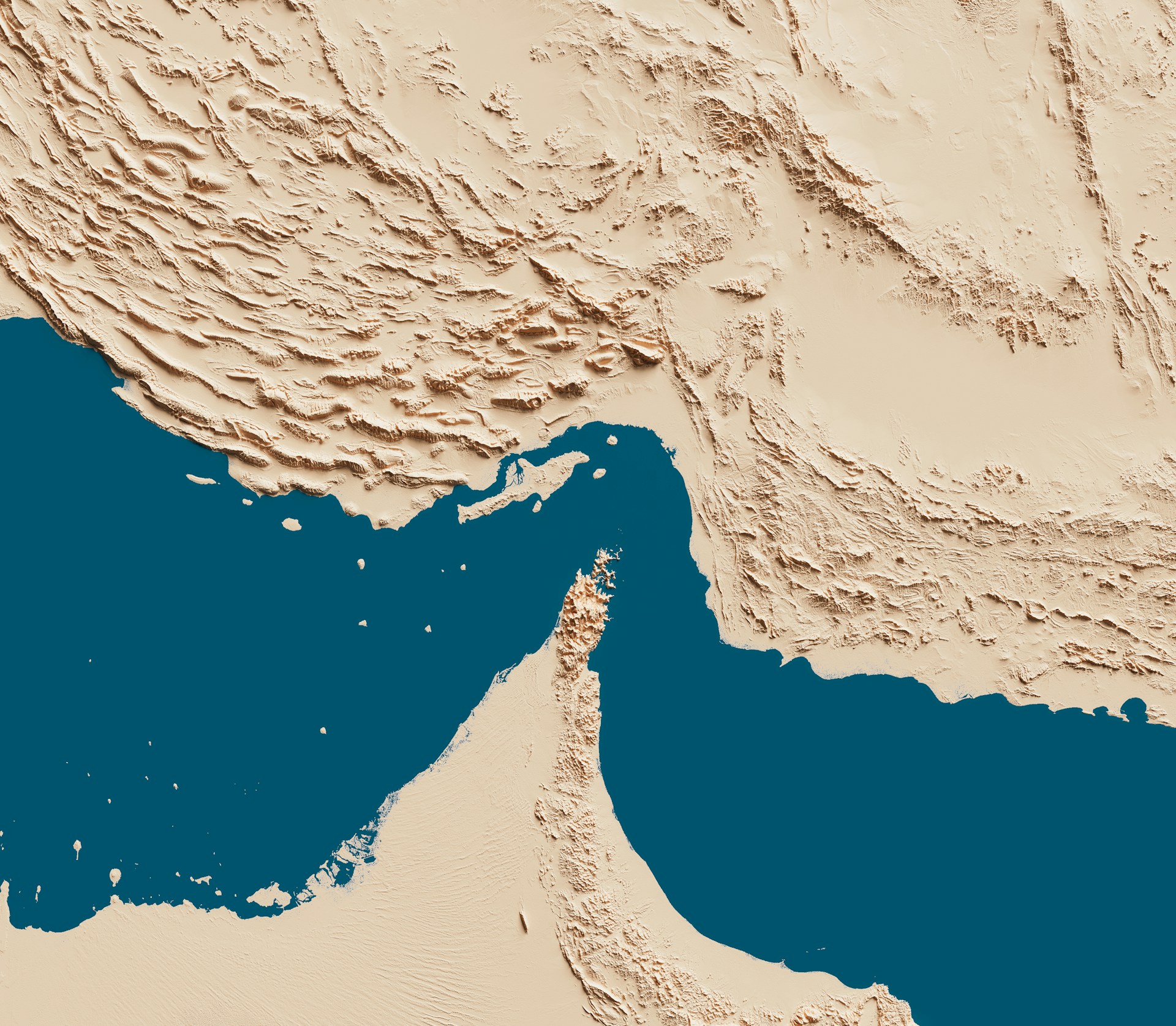
In 2026, three factors converge to make this question central to any disposal or transmission transaction. First, the blockade of the Strait of Hormuz, through which roughly a quarter of the world's seaborne oil transits, has triggered the largest shock to the oil market in decades. Second, the fragmentation of supply chains is raising production costs and compressing the margins of Franco-Swiss industrial SMEs. Third, macroeconomic uncertainty is pushing investors to demand a higher risk premium, which mechanically lowers valuation multiples. This article explains, step by step, how these macro shocks translate into a company's value: definition and origin of the phenomenon, transmission mechanisms to the cost of capital, the methodology for integrating it into a valuation, trigger situations, the advantages and limits of a rigorous approach, frequent mistakes, two quantified case studies, and a full FAQ.
Secure your company's value against macro shocks
Before going into the mechanics, one certainty: a valuation that ignores the geopolitical context is a fragile valuation. To concretely assess your company's exposure and build a value range that holds up against a buyer, book a 30-minute conversation with Hectelion. We then go through, point by point, how geopolitical risk lodges itself in every parameter of your valuation.
Definition: what is geopolitical risk in business valuation?
Geopolitical risk covers all the economic uncertainties generated by conflictual relations between states: wars, military threats, sanctions, embargoes, nationalisations, political instability and disruptions to strategic logistics chains. In business valuation, this risk does not remain abstract: it transmits to value through two concrete channels that every business owner must understand. The first channel is cash flows: a geopolitical shock raises the cost of energy, raw materials and freight, compresses margins, delays investment and weakens certain commercial outlets.
The second channel is the discount rate: faced with heightened uncertainty, investors demand additional compensation, which raises the risk premium and therefore the cost of capital. Since a company's value is, in a cash-flow approach, the sum of future cash flows discounted at this cost of capital, any increase in the denominator lowers the value. The International Monetary Fund formalised these two transmission channels in its report on global financial stability, stressing that geopolitical risk acts simultaneously on asset prices and on the cross-border allocation of capital (IMF Global Financial Stability Report, 2025).
Origins: from academic country risk to a measurable 2026 index
The idea that a company's political geography weighs on its value is not new. As early as the 1990s, valuation practitioners introduced the notion of the country risk premium, popularised in particular by the work of Aswath Damodaran at NYU Stern School of Business, who publishes default spreads and risk premiums by country every year (NYU Stern, Country Default Spreads and Risk Premiums). For a long time, this premium was applied mainly to emerging markets, and considered nil or negligible for AAA-rated economies such as France and Switzerland.
The conceptual breakthrough came from measurement: in 2022, Dario Caldara and Matteo Iacoviello published in the American Economic Review a geopolitical risk index based on the automated analysis of millions of press articles, turning a diffuse intuition into an exploitable time series (Measuring Geopolitical Risk, AER 2022). Since then, the academic literature has established that a rise in this index translates into lower corporate investment and a higher cost of equity. In 2026, the blockade of the Strait of Hormuz turned this theoretical topic into a boardroom reality, including for Franco-Swiss SMEs that until then believed themselves sheltered.
Why integrate geopolitical risk into a valuation
Integrating geopolitical risk into a valuation serves five purposes: credibility, since professional investors systematically price these parameters; building a value range rather than a fragile single point; choosing the right timing to sell, raise funds or transmit; structuring contractual mechanisms such as earn-outs to absorb part of the risk; and documenting exposure as part of the board's duty of care.
Ignoring geopolitical risk in a valuation amounts to presenting a value that will not withstand the first counter-assessment by a savvy buyer.
First, it is a matter of credibility: a professional investor or a private equity fund systematically incorporates these parameters, and a valuation that omits them appears naive.
Second, it is a matter of range: acknowledging uncertainty makes it possible to build a value range rather than a fragile single point, and therefore to negotiate better.
Third, it is a matter of timing: understanding how a macro shock distorts value helps decide the right moment to sell, raise funds or transmit.
Fourth, it is a matter of structuring: part of the risk can be absorbed by contractual mechanisms (price adjustments such as an earn-out, indexation clauses, warranties) rather than by a simple price discount.
Fifth, it is a matter of governance: for a board of directors or a family shareholder, documenting geopolitical exposure is part of the duty of care. Academic research confirms this necessity: geopolitical risk has a lasting negative impact on corporate investment and capital structure (Geopolitical Risk and Investment, SSRN).
How geopolitical impact on value is built
A macro shock is transmitted to value through six steps: map the company's exposure to sensitive regions and inputs, measure the effect on cash flows and EBITDA margin, reassess the risk premium, recalculate the WACC, adjust the market multiples observed among comparables, and cross-check the DCF and comparables methods to obtain a coherent value range.
The transmission of a macro shock to valuation follows a logical chain of six steps that a rigorous valuer reconstructs methodically. The first step is to map the exposure: what share of the company's revenue, purchases and logistics depends on sensitive regions, raw materials or trade routes? The second step measures the effect on cash flows: a Hormuz-type shock raises the cost of energy and freight, which compresses the EBITDA margin, especially for input-intensive industries. The third step reassesses the risk premium: the market risk premium is adjusted upwards and, where relevant, a country risk premium weighted by the share of exposed activity is applied.
The fourth step recalculates the weighted average cost of capital (WACC), whose increase mechanically compresses the discounted value of cash flows. It is the most sensitive parameter, as we detail in our dedicated analysis of the WACC. The fifth step adjusts the market multiples: a higher cost of capital translates into a contraction of the EV/EBITDA multiples observed among comparables, a subject we address in our study on sector valuation multiples. The sixth step is to cross-check the methods: comparing the discounted cash flow (DCF) approach with the comparables approach, in line with the multi-method practice aligned with the IVSC standards, in order to obtain a coherent value range rather than an isolated figure.
When to use a valuation that incorporates geopolitical risk
A valuation that incorporates geopolitical risk is essential in a disposal or acquisition project, in a family transmission or management buy-out, in a fundraising where investors scrutinise supply-chain exposure, and for any company significantly dependent on energy, imported raw materials, maritime freight or outlets in at-risk regions.
Some situations make the explicit integration of geopolitical risk no longer optional but essential. This is the case in a disposal or acquisition project, where the value must hold up against a counter-assessment. This is the case in a family transmission or a management buy-out, where the value retained has lasting tax and wealth consequences. This is the case in a fundraising, where the investor will scrutinise the company's exposure to sensitive supply chains. This is the case, finally, for any company whose activity depends significantly on energy, imported raw materials, maritime freight or outlets in at-risk regions.
In 2026, the Hormuz shock has widened this perimeter well beyond the sectors traditionally deemed exposed: the rise in energy prices and logistics costs is spreading across the entire economy, with the World Economic Forum now identifying geoeconomic confrontation as one of the major risks of 2026 (World Economic Forum, Global Risks Report 2026).
Who to turn to for a robust valuation
Valuing a company under geopolitical constraint requires three rarely combined skills. The first is technical mastery of building the cost of capital and of valuation methods, in order to correctly quantify the effect of a shock on the risk premium and the multiples. The second is a sectoral and macroeconomic understanding, in order to map the company's real exposure rather than apply an arbitrary flat discount. The third is independence from traditional financial intermediaries, so that the value retained is biased neither by an interest in closing a transaction, nor by a placement mandate.
Hectelion combines these three requirements: an independent boutique firm with dual Franco-Swiss expertise, we support the owners of SMEs and mid-caps on transactions of CHF 2 to 500 million, with a multi-method methodology aligned with the IVSC standards and with AMF/SIX market practice. This rigour also applies to our fairness opinion engagements on unlisted companies, it being specified that Hectelion is not FINMA-licensed and does not intervene on listed transactions. Our economic independence from traditional financial intermediaries guarantees a valuation that serves your decision alone. Discover our approach to business valuation.
Advantages: credibility, negotiation, anticipation
The three main advantages are credibility, because a valuation that explains how the macro context distorts value withstands counter-assessment; negotiating strength, because objectifying the cyclical share of a discount supports an earn-out indexed on normalisation rather than a permanent price cut; and strategic anticipation, helping choose when to sell or raise funds and reduce exposure upstream.
Rigorously integrating geopolitical risk into a valuation provides three major benefits.
The first is credibility in front of the counterparty: a valuation that explains why and by how much the macro context distorts value withstands the counter-assessment and inspires confidence in both the buyer and the financier.
The second is negotiating strength: by objectifying the share of the discount attributable to a cyclical and therefore potentially reversible shock, the seller can argue for a price adjustment (earn-out) indexed on a normalisation, rather than suffering a permanent discount.
The third is strategic anticipation: understanding one's own sensitivity to shocks makes it possible to calmly decide the moment to sell or raise funds, and to engage upstream in exposure-reduction actions such as diversifying suppliers, hedging currency and raw-material risks, or partial reshoring. A valuation that informs the decision is worth far more than a mere figure.
Limits: uncertainty, subjectivity, reversibility
The approach has three limits: intrinsic uncertainty, since the duration and magnitude of a shock rest on scenarios rather than certainties; subjectivity, since calibrating a risk premium increase or a multiple discount relies on expert judgement requiring traceable assumptions; and reversibility, since a discount applied at the height of tension may prove excessive in hindsight.
The approach nonetheless has three limits that must be acknowledged honestly.
The first is intrinsic uncertainty: no one knows how long a shock such as Hormuz will last, nor its final magnitude, so that any quantification rests on scenarios rather than certainties.
The second is the element of subjectivity: calibrating an increase in the risk premium or a multiple discount is a matter of expert judgement, which requires transparency and traceability of assumptions to avoid arbitrariness.
The third is reversibility: a geopolitical shock can unwind quickly, and a discount applied at the height of tension may prove excessive in hindsight, hence the value of reasoning in ranges and favouring contractual adjustment mechanisms rather than a fixed discount. Acknowledging these limits does not weaken the valuation: on the contrary, it strengthens its credibility by distinguishing what is measured from what is estimated.
The 5 mistakes to avoid
Mistake 1: Considering France and Switzerland as fully immune
Many business owners believe that a Franco-Swiss company, based in AAA-rated countries, escapes geopolitical risk. This is an optical error. While the country risk premium specific to France or Switzerland indeed remains low (as our glossary on the country risk premium recalls), the real exposure depends on the value chain: a Swiss subcontractor whose inputs transit through the Strait of Hormuz, or whose clients are in an exposed region, takes the full force of the shock. Risk is not read on the registered office, but on the economic geography of the activity.
Mistake 2: Applying a flat discount without exposure analysis
Conversely to overconfidence, some apply a uniform discount “because the context is uncertain”. This is just as wrong. A discount of 15% or 20% applied without mapping the truly exposed share of revenue and purchases destroys value in an unjustified way and will not withstand negotiation. Rigour requires quantifying exposure before quantifying the discount.
Mistake 3: Double-counting risk in cash flows and in the rate
The most frequent technical mistake is to penalise the same risk twice: first by lowering the projected cash flows, then a second time by raising the discount rate for the same reason. This double-counting artificially crushes value. The methodological rule is clear: a specific and quantifiable risk is handled in the cash flows (scenarios); a systematic and diffuse risk is handled in the rate (risk premium). Never both for the same factor.
Mistake 4: Confusing a temporary shock with structural deterioration
A geopolitical shock can be a temporary spike or the sign of a lasting rupture. Treating a cyclical spike as a permanent deterioration, by extrapolating it over the whole duration of the business plan, leads to gross undervaluation. Conversely, downplaying a structural fragmentation of supply chains leads to overvaluation. The challenge is to calibrate the persistence of the shock, scenario by scenario.
Mistake 5: Neglecting contractual structuring levers
Many sellers endure the geopolitical discount as a fatality, whereas part of the risk can be transferred or shared contractually. Price adjustments indexed on a normalisation, adjustment clauses, targeted asset and liability warranties: these mechanisms, which fall within our financial structuring services, make it possible to preserve value that a discussion on price alone would lose.
Case 1: Franco-Swiss industrial SME exposed to energy (MCHF 42 revised to MCHF 34)
Consider a Franco-Swiss plastics-processing SME generating 6.0 MCHF of EBITDA, valued before the shock at a multiple of 7.0x, that is an enterprise value of 42.0 MCHF, with an initial WACC of 9.0%. This company is energy and plastic-raw-material intensive, with part of its inputs depending on supply routes passing through the Persian Gulf. The blockade of the Strait of Hormuz produces a twofold effect. First, an effect on cash flows: the rise in the price of energy and resins compresses the margin, bringing EBITDA down from 6.0 to 5.4 MCHF, a decline of 10%.
Then, an effect on the rate: the heightened uncertainty raises the risk premium, taking the WACC from 9.0% to 10.0%, which translates into a contraction of the implied multiple from 7.0x to 6.3x. The new enterprise value then stands at 5.4 MCHF × 6.3x, that is 34.0 MCHF. The valuation falls by 8.0 MCHF, a discount of 19%, of which roughly half comes from the margin compression and the other half from the drift in the cost of capital.
The analysis here makes it possible to isolate the reversible portion (the margin, which will normalise if the shock unwinds) from the structural portion, and to propose an earn-out indexed on the recovery of the margin rather than a permanent discount of 8 MCHF.
Case 2: Exporting agri-food mid-cap exposed to country risk (MCHF 120 revised to MCHF 98)
Consider an exporting agri-food mid-cap generating 15.0 MCHF of EBITDA, valued before the shock at a multiple of 8.0x, that is an enterprise value of 120.0 MCHF, with an initial WACC of 8.5%. This company exports a significant share of its production to emerging markets and depends on international maritime freight. The 2026 geopolitical shock here too produces a twofold effect, but of a different nature.
The effect on cash flows stems from the surge in freight costs and marine insurance premiums, which cuts into the margin and brings EBITDA down from 15.0 to 13.5 MCHF, a decline of 10%. The effect on the rate stems from a country risk premium weighted by the share of revenue exposed to at-risk regions: applied to the relevant fraction, it raises the WACC from 8.5% to 9.5%, contracting the implied multiple from 8.0x to 7.3x. The new enterprise value stands at 13.5 MCHF × 7.3x, that is roughly 98.5 MCHF, rounded to 98 MCHF.
The valuation falls by 22 MCHF, a discount of 18%. This case illustrates the importance of the country risk premium weighted by real exposure, in line with the reference methodology, rather than a flat premium: only the share of the activity that is genuinely exposed justifies the adjustment.
A word from the managing director
“In twenty years of valuation practice, I have rarely seen an exogenous factor enter the negotiating room as brutally as geopolitical risk did in 2026. Business owners convinced they were sheltered because they are Swiss or French discover that their value chain exposes them directly to a strait they had never mapped.”
“My conviction is that one must neither give in to panic by selling the company off cheaply, nor bury one's head in the sand by ignoring the shock. The right response is analytical: measure the real exposure, distinguish the reversible portion from the structural portion, and turn an endured discount into an intelligent pricing mechanism. A 20% discount applied at the height of a crisis is not of the same nature as a permanent deterioration.”
“This is precisely the role of an independent valuer: to give the business owner back control over their value, even when the world seems to be slipping away from them. A rigorous valuation does not erase uncertainty, but it allows decisions to be made with full knowledge of the facts.”
Aristide Ruot, Ph.D., Founder & Managing Director, Hectelion SA.
FAQ: the 10 essential questions on geopolitical risk and valuation
Introduction: what to remember before the questions
Geopolitical risk acts on a company's value through two channels: it compresses cash flows (margins, investment, outlets) and it raises the cost of capital (risk premium). Understanding this twofold transmission is the key to neither suffering an unjustified discount nor overvaluing an exposed company. The ten questions below answer the most frequent concerns of the owners of Franco-Swiss SMEs and mid-caps.
Q1: Does geopolitical risk really concern Franco-Swiss SMEs?
Yes, and that is precisely the trap. The risk premium specific to France and Switzerland remains low, but real exposure depends on the value chain: imported inputs, energy, maritime freight, export outlets. A Swiss SME whose supplies transit through a sensitive route takes the shock as much as a large company. The analysis bears on the economic geography of the activity, not on the location of the head office.
Q2: How does a shock such as the Hormuz blockade transmit to value?
Through two simultaneous channels. The cash-flow channel: the rise in energy, raw materials and freight compresses the EBITDA margin. The rate channel: uncertainty pushes investors to demand a higher risk premium, which raises the cost of capital and mechanically lowers the discounted value of future cash flows. UNCTAD recalls that the Strait of Hormuz carries roughly a quarter of the world's seaborne oil trade (UNCTAD, 2026).
Q3: By how much can the cost of capital rise?
There is no universal figure: the magnitude depends on the company's exposure and on the intensity of the shock. In our case studies, a 100 basis point rise in the WACC (for example from 9.0% to 10.0%) is plausible for an exposed company. This rise, combined with a margin compression, can produce a valuation discount of 15 to 20%. Each situation nonetheless requires a specific calibration, scenario by scenario.
Q4: Should risk be penalised in the cash flows or in the discount rate?
The methodological rule is never to penalise the same risk twice. A specific and quantifiable risk (for example the loss of an identified outlet) is handled in the cash flows, via scenarios. A systematic and diffuse risk, such as general macroeconomic uncertainty, is handled in the rate, via the risk premium. Confusing the two leads to a double-counting that artificially crushes value.
Q5: What is the country risk premium and when should it be applied?
The country risk premium is an additional return required to invest in a region exposed to political, financial or economic risk. It is computed from sovereign default spreads adjusted by the relative volatility of equity markets, following Aswath Damodaran's reference methodology (NYU Stern). In practice, it is applied weighted by the share of activity that is genuinely exposed, and not on a flat basis.
Q6: Is a geopolitical discount permanent?
No, and that is a crucial point in negotiation. Part of the discount stems from a potentially reversible shock (margin compression linked to a price spike). Rather than recording it permanently, it is often preferable to handle it through a price adjustment (earn-out) indexed on a normalisation, or through an adjustment clause. Distinguishing the reversible portion from the structural portion is one of the main contributions of a rigorous valuation.
Q7: Can geopolitical risk be measured objectively?
Partly. There are recognised academic indices, such as the geopolitical risk index by Caldara and Iacoviello published in the American Economic Review, which quantify the intensity of risk from press analysis (AER, 2022). These indices objectify the general trend, but their translation into valuation assumptions for a given company always remains a matter of expert judgement, which must be transparent and documented.
Q8: How can I reduce my company's exposure before a disposal?
Several levers exist: diversifying suppliers and logistics routes, financially hedging currency and raw-material risks, partial reshoring of critical supplies, and contractually securing outlets. Undertaking these actions upstream of a disposal process improves not only operational resilience, but also the valuation, because a buyer values controlled exposure.
Q9: Does geopolitical risk affect all valuation methods?
Yes. In the discounted cash flow (DCF) approach, it acts on the cash flows and on the WACC. In the comparables approach, it acts on market multiples, which contract when the sector cost of capital rises. This is why a multi-method approach, aligned with the IVSC standards, is essential: it makes it possible to cross-check angles and obtain a coherent value range rather than a fragile single point.
Q10: Why call on an independent valuer rather than my bank?
Because independence guarantees the objectivity of the value. A financial intermediary with an interest in closing a transaction, or in placing financing, may be tempted to bias the valuation in a direction favourable to its mandate. An independent boutique firm like Hectelion, with no interest in the transaction itself, produces a valuation that serves the business owner's decision alone, which is precisely what a board of directors or a family shareholder must be able to document.
Conclusion: turning geopolitical uncertainty into a controlled decision
Geopolitical risk is no longer a subject reserved for multinationals or emerging markets: in 2026, the blockade of the Strait of Hormuz demonstrated that a macro shock can shave 15 to 20% off the value of a Franco-Swiss SME or mid-cap, through the twofold mechanism of margin compression and a rising cost of capital. For the business owner, the challenge is neither to panic nor to ignore the phenomenon, but to analyse it: map the real exposure, distinguish the reversible portion from the structural portion, rigorously calibrate the effect on cash flows and on the rate, and mobilise contractual structuring levers to preserve value.
A valuation that honestly integrates these parameters does not erase uncertainty, but it gives the business owner back control over their value and the strength to negotiate. That is precisely the vocation of an independent valuer with dual Franco-Swiss expertise.
Article summary
Geopolitical risk refers to the economic uncertainty generated by tensions between states, and it transmits to a company's value through two channels: the compression of cash flows (margins, investment, outlets) and the rise in the cost of capital (risk premium). Long confined to emerging markets, this risk has become measurable thanks to the Caldara and Iacoviello index, and established itself in 2026 as a central issue for Franco-Swiss SMEs and mid-caps on the occasion of the Strait of Hormuz shock.
Integrating this risk into a valuation follows a chain of six steps: map the exposure, measure the effect on cash flows, reassess the risk premium, recalculate the WACC, adjust the multiples and cross-check the methods in line with the IVSC standards. The two case studies presented, a plastics-processing SME moving from 42 to 34 MCHF and an agri-food mid-cap moving from 120 to 98 MCHF, illustrate a discount of 18 to 19%, decomposable between a reversible portion and a structural portion.
The main mistakes to avoid are believing France and Switzerland to be immune, applying a flat discount without exposure analysis, counting the same risk twice, confusing a temporary shock with structural deterioration, and neglecting contractual structuring levers. The right approach always distinguishes what is measured from what is estimated, and favours the value range over the false precision of a single figure.
Hectelion, an independent boutique firm with dual Franco-Swiss expertise, supports business owners on transactions of CHF 2 to 500 million with a multi-method methodology aligned with the IVSC standards, serving the business owner's decision alone.
Sources
- Accuracy, “Country risk, geopolitical risk and business valuation”. Link: accuracy.com
- Caldara, D. & Iacoviello, M. (2022), “Measuring Geopolitical Risk”, American Economic Review, 112(4). Link: aeaweb.org
- Coface, “Switzerland: country risk assessment”. Link: coface.com
- Damodaran, A., “Country Default Spreads and Risk Premiums”, NYU Stern School of Business. Link: pages.stern.nyu.edu
- “Geopolitical risk and corporate capital structure”, University of Texas Rio Grande Valley. Link: scholarworks.utrgv.edu
- “Geopolitical Risk and Investment”, SSRN Working Paper. Link: papers.ssrn.com
- “Geopolitical risk and the cost of capital in emerging economies”, ScienceDirect. Link: sciencedirect.com
- Geopolitical Risk (GPR) Index, data and updates. Link: matteoiacoviello.com
- International Monetary Fund, “Geopolitical Risks: Implications for Asset Prices and Financial Stability”, Global Financial Stability Report (2025). Link: imf.org
- International Monetary Fund, “How the War in the Middle East Is Affecting Energy, Trade, and Finance” (March 2026). Link: imf.org
- International Valuation Standards Council (IVSC), valuation standards. Link: ivsc.org
- UNCTAD, “Strait of Hormuz disruptions: Implications for global trade and development”. Link: unctad.org
- World Economic Forum, “The Global Risks Report 2026”. Link: weforum.org
Author
Aristide Ruot, Ph.D.
Founder | Managing Director, Hectelion SA