
Manufacturing Readiness Level (MRL): Definition, Valuation and WACC
MRL | Valuation & Assessment: integrating industrial maturity into the cost of capital

Introduction: Integrating Industrial Maturity into Financial Risk Analysis
In a context where mergers and acquisitions and investment decisions increasingly focus on technology-intensive targets, assessing scientific maturity alone is no longer sufficient to form a rigorous financial judgement. The rise of deep tech companies, industrial spin-offs, and energy transition projects has highlighted a reality well known to valuation practitioners: a promising technology may prove economically unviable if its industrial-scale manufacturing has not yet been demonstrated.
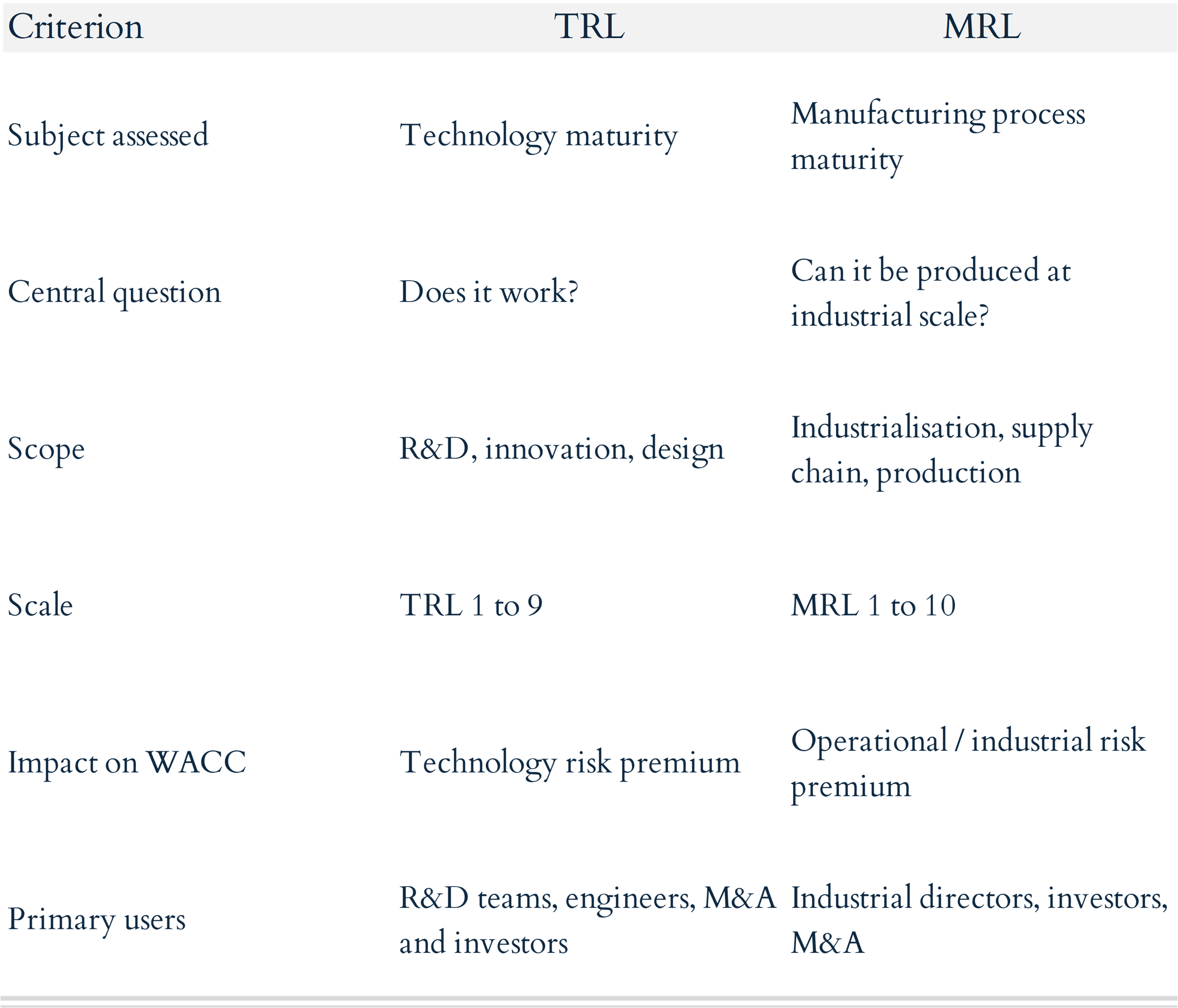
It is to address this gap that the Manufacturing Readiness Level was developed, commonly referred to by its acronym MRL. It is a standardised scale, graduated from 1 to 10, measuring the degree of manufacturing process maturity of a technology or product — from the simple identification of production requirements through to full industrial mastery. Unlike the Technology Readiness Level (TRL), which assesses the functionality of a technology, the MRL evaluates its ability to be produced in a reproducible, cost-effective, and scalable manner — two complementary but fundamentally distinct dimensions.
The scope of this distinction is well summarised by the official definition of the U.S. Department of Defense (DoD): "Manufacturing readiness is the ability to produce a product that meets design requirements at an affordable cost and schedule" (U.S. Department of Defense, Manufacturing Readiness Level Deskbook, 2012). A formulation that appears simple, but condenses a considerable financial challenge for any investor or adviser involved with an industrial asset.
This raises a central question for any evaluator or adviser working on such assets: how can the risk associated with manufacturing capability be objectified, and in what way should it be integrated into the standard tools of financial valuation — foremost among which the weighted average cost of capital (WACC) and discounted cash flow (DCF) models? It is this question that the present article seeks to address in a structured and operational manner.
After tracing the origins of the MRL, we will define its structure and ten constituent levels, examine its application context and the methodology for integrating it into a valuation process. We will then analyse its advantages and limitations, illustrate our discussion with concrete cases from practice, and conclude with the perspective of Hectelion's managing director on the operational use of this indicator.
Academic and Institutional Origins of the Manufacturing Readiness Level
The MRL has its roots in U.S. defence acquisition programmes of the 1990s and 2000s. Faced with a proliferation of cost overruns and industrial delays on major military programmes — particularly in the aeronautical and naval sectors — the U.S. Department of Defense sought to develop a tool for evaluating, in a structured and reproducible manner, the ability of contractors to produce the contracted systems under the conditions specified in the requirements.
It was in this context that the first Manufacturing Readiness Level Deskbook was published in 2003, the result of a collaboration between the Office of the Under Secretary of Defense for Acquisition, Technology and Logistics (OUSD AT&L) and the main U.S. defence contractors, including Lockheed Martin, Boeing, and Raytheon (U.S. DoD, MRL Deskbook, 2003). The objective was explicit: to have a common reference framework enabling alignment between the expectations of the commissioning authority and the contractor on industrial maturity milestones, and to detect cost overrun risks upstream before committing to serial production phases.
Originally designed for defence programmes, the MRL was progressively adopted by NASA — where it now features in the NASA Systems Engineering Handbook (NASA/SP-2016-6105 — the MRL is referenced there as a complement to the TRL, not as the central subject) — and subsequently by the civil aeronautical, automotive, and pharmaceutical sectors. Its diffusion into the financial ecosystem was driven by the technical due diligence practices of industrial private equity funds, which made the MRL a standalone evaluation criterion in their investment processes. Today, the MRL is recognised as a de facto standard in any serious analysis of technology and industry-intensive assets.
Would you like to have your business, asset or financial instrument valued?
Hectelion conducts independent valuations in France and Switzerland — business sale, divorce, shareholders agreement, taxation, assets and financial instruments.
→ Book a call — 30 minutes, confidential
Definition and Structure of the MRL Scale
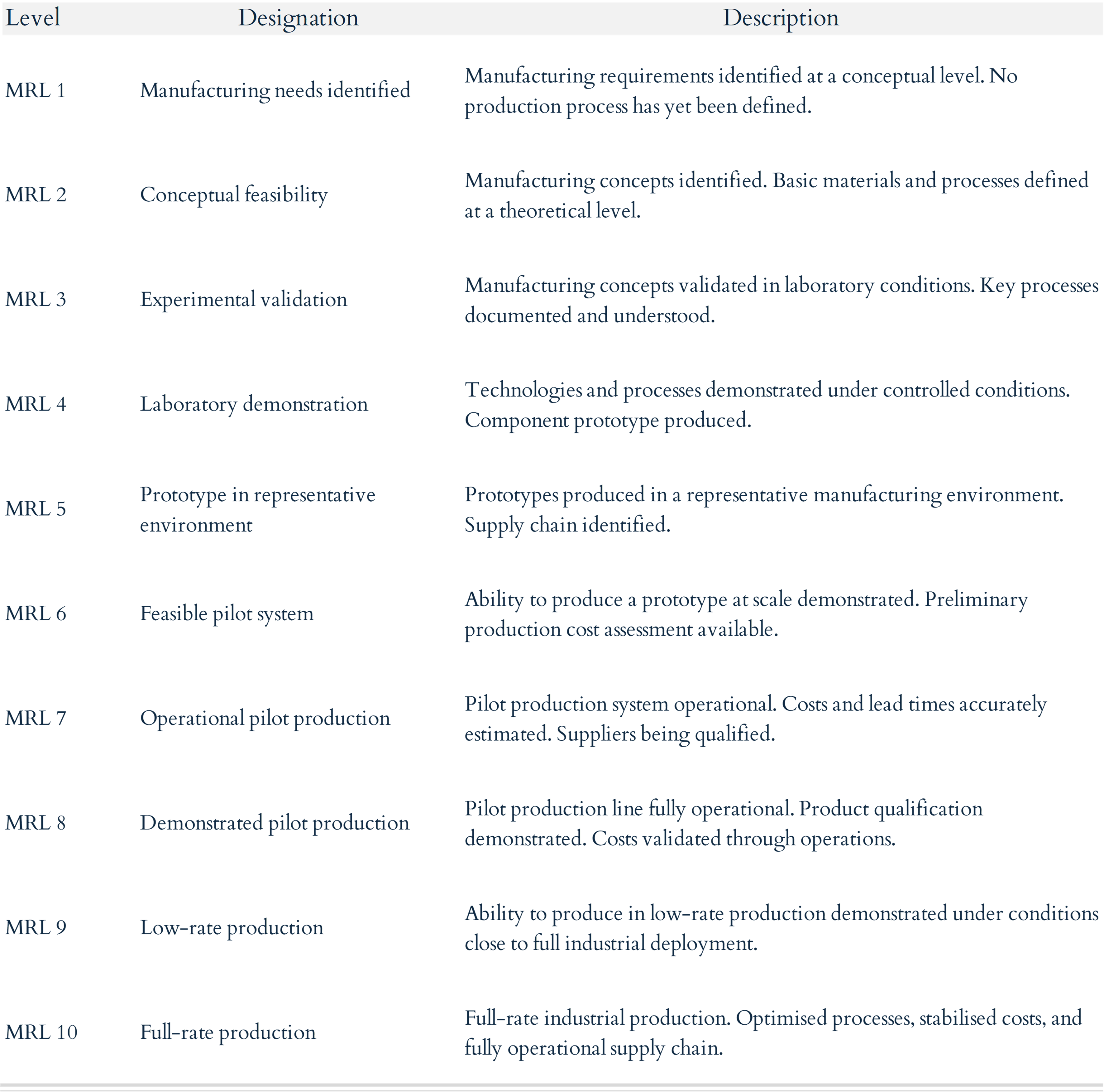
The Manufacturing Readiness Level is an ordinal scale of ten levels describing, in a progressive and cumulative manner, the manufacturing process maturity of a technological asset. Each level corresponds to a precise set of documented and verifiable criteria, enabling an objective assessment of an organisation's ability to produce a given product under defined industrial conditions. The cumulative structure of the scale implies that a higher level cannot be reached unless all conditions of the preceding level are fully met.
It is essential to distinguish the MRL from the TRL, with which it is frequently confused in financial analyses. This confusion is the source of many valuation errors, particularly for assets presenting a high TRL but a still-low MRL — a situation common in university spin-offs and deep tech startups. The following table summarises the main differences between these two indicators.
In practice, the ten MRL levels are distributed across four main phases: the conceptual phase (MRL 1 to 3), the prototype phase (MRL 4 to 6), the pilot phase (MRL 7 to 8), and the industrial phase (MRL 9 to 10). The following table presents the detail.
MRL Application Context: When and Why to Use It
The MRL is not a universal indicator applicable to every situation. Its use is relevant when three conditions are met: the asset being evaluated has a significant industrial manufacturing component, this component is incompletely mature at the time of analysis, and progression towards industrial maturity is a direct determinant of the asset's value or risk.
Outside these conditions, the MRL provides little additional information. A service company, a purely software asset, or a company whose manufacturing processes are fully established and certified has no reason to undergo an in-depth MRL assessment. Conversely, its use becomes indispensable in the following situations:
- When acquiring or investing in an industrial or deep tech company. When a target develops or operates a physical product whose manufacturing process has not yet reached full industrial maturity, the MRL constitutes a structural risk indicator. It qualifies the distance separating the asset from a profitable and reproducible commercial production.
- When valuing assets in the context of a disposal, a fundraising or a restructuring. Any DCF valuation rests on assumptions about future cash flows. If these flows depend on a company's ability to industrialise its production, the MRL directly conditions the reliability of those assumptions. An asset at MRL 4 cannot generate the same cash flows as an asset at MRL 8 over the same time horizons.
- During industrial or financial due diligence. The MRL provides a structured framework for questioning management teams about the actual state of their manufacturing process, validating business plan assumptions, and identifying industrial risks not yet provisioned.
- When structuring pricing mechanisms in a transaction. Earn-outs conditional on reaching precise MRL milestones, liability guarantees covering industrialisation costs, or price adjustments linked to MRL progression are transactional instruments directly calibrated on this indicator.
Sectors of Application
In the aeronautical and space sector, the MRL constitutes a contractual milestone in its own right. Government agencies and major prime contractors generally require a minimum MRL of 8 before entering serial production, and formal programme reviews (PDR, CDR, PRR) incorporate a documented MRL assessment. The automotive industry has adopted a similar logic, particularly for battery technologies, advanced driver assistance systems (ADAS), and electric powertrains, where mastery of the large-scale manufacturing process directly determines unit cost competitiveness.
In the pharmaceutical and medical device sectors, the MRL is closely articulated with regulatory requirements. The manufacturing process validation imposed by the FDA (Process Validation Guidance, 2011) and the EMA corresponds, in practice, to MRL levels 7 to 9. An insufficient MRL level may constitute an insurmountable obstacle to obtaining market authorisation — making it a central evaluation criterion in any M&A transaction in this sector.
For deep tech startups, industrial spin-offs, and energy transition projects — green hydrogen, solid-state batteries, 4D printing — the MRL has become an increasingly important selection criterion for industrial venture capital funds and the corporate venture arms of major groups. A low MRL level does not necessarily disqualify an early-stage investment, but it must be explicitly accounted for in the valuation, the financing plan, and the contractual conditions attached to the transaction.
The MRL in M&A Transactions
In the context of an acquisition of an industrial or technological company, MRL assessment intervenes at several stages of the transactional process. During the screening phase, an insufficient MRL level on the target's main asset constitutes a warning signal justifying further technical and operational due diligence. During the negotiation phase, the MRL can legitimise price adjustments, earn-out mechanisms conditional on reaching precise industrial milestones, or specific guarantees covering production costs and production ramp-up timelines.
Get a first indicative business estimate
Hectelion offers a free indicative valuation tool based on Franco-Swiss market data — no commitment required.
→ Access the indicative valuation tool
Why Use the MRL in Financial Evaluation and Valuation
The financial valuation of an industrial or technological asset rests on two fundamental pillars: the estimation of future cash flows and the determination of the appropriate discount rate. The MRL simultaneously influences both of these components, making it an analytical tool with direct financial scope — and not merely a technical indicator reserved for engineers.
A Tool for Correcting Optimism Bias
The first reason to integrate the MRL into a valuation lies in the very nature of the cognitive biases affecting the financial projections of companies in the industrialisation phase. Management teams tend to underestimate industrialisation costs and timelines, overestimate initial production yields, and present business plans whose implicit assumptions presuppose a more advanced MRL than the one actually reached. The DoD MRL Deskbook highlights in this regard that MRL assessments make it possible to identify maturity insufficiencies, associated risks and costs, and to support industrial maturation management. By imposing an objective assessment framework, the MRL compels a confrontation of financial projections with the reality of the industrial stage reached.
A Tool for Quantifying Industrial Risk
Industrial risk — that is, the probability that production costs, timelines, or yields deviate significantly from projections — is one of the most difficult risks to quantify in a standard valuation. It does not appear in standard CAPM models, it is only partially captured by sector betas, and it often remains absent from sensitivity analyses. The MRL provides an objective basis for estimating this risk and translating it into an adjustment of the discount rate — as detailed in the following section.
A Tool for Coherence Between Valuation and Business Plan
A credible business plan must be consistent with the MRL stage of the asset. An asset at MRL 5 cannot achieve the production volumes assumed in a three-year projection without significant CAPEX investment and a realistic production ramp-up timeline. Integrating the MRL into financial modelling enables the construction of cash flow trajectories whose timing is aligned with industrial reality, and thus avoids the systematic overvaluation of assets in industrial transition phases.
A Tool for Structuring Transactional Mechanisms
Finally, the MRL offers a contractually robust basis for structuring pricing mechanisms in M&A transactions. An earn-out conditional on reaching MRL 7 by a given date, or a liability guarantee covering industrialisation cost overruns beyond a defined threshold, are mechanisms directly calibrated on an objective and documented indicator — reducing the risks of post-closing disputes and strengthening trust between the parties.
The MRL in European Standards and Reference Frameworks
While the MRL originated in the U.S. defence ecosystem, its use has progressively extended to Europe, driven by several converging dynamics: the growing industrial integration of European defence programmes, the rise of deep tech funds and public innovation programmes, and the growing awareness among financial players of industrial risk as a structural component of investment risk.
The SAE AS6500 Standard — Manufacturing Management Program
The primary vehicle for the international institutionalisation of the MRL is the SAE AS6500 — Manufacturing Management Program standard, published in November 2014 by the G-23 Manufacturing Management Committee of SAE International. This standard explicitly integrates the use of MRL as a tool for assessing manufacturing process maturity, and applies to all phases of the acquisition lifecycle. It now constitutes a market reference for major aerospace and defence programmes involving European players, notably through the contractual requirements of U.S. prime contractors (Boeing, Lockheed Martin, Northrop Grumman) vis-à-vis their European subcontractors.
ASD-STAN and European Aerospace Standards
At the European level, ASD-STAN — the Aerospace and Defence Industries Association of Europe - Standardization — is the reference body for the development of European aerospace standards. It collaborates with the European Defence Agency (EDA) on defence-related standardisation topics, and is recognised by the International Aerospace Quality Group (IAQG) as the exclusive provider of worldwide aerospace standards of the 9100 series for the European sector. In this context, the AS9100 (aerospace quality management systems) and AS9102 (First Article Inspection) standards — integrated into the ASD-STAN framework — constitute the quality foundation within which MRL assessment is embedded for European programmes.
The Horizon Europe Programme and Technological Maturity
Within the Horizon Europe programme — endowed with approximately €95.5 billion for the 2021-2027 period — the TRL is integrated as an eligibility and evaluation criterion for research and innovation projects. While the MRL is not formally required as an eligibility criterion in Horizon Europe, it is de facto applied in projects under Pillars 2 and 3, notably in EIC (European Innovation Council) programmes targeting deep tech startups and industrial companies in scale-up phases. EIC Accelerator project evaluators incorporate in practice the industrial maturity dimension — corresponding to the MRL — in their assessment of the execution risk of candidate projects.
The MRL Deskbook — 2025 Version
An important point for practitioners: the DoD published an updated version of the MRL Deskbook on 1 May 2025. This 2025 revision introduces no policy changes nor modifications to the MRL criteria matrix, but improves clarity, terminological consistency, and alignment with the DoD's Adaptive Acquisition Framework (AAF). This version now constitutes the official reference, publicly available at dodmrl.com. This article cites the 2011 Version 2.0 for the fundamental definitions of MRL levels, which remain valid — but all operational practice should now refer to the 2025 Deskbook.
Methodology: Assessing and Integrating the MRL into Valuation
Integrating the MRL into a financial valuation process requires a structured approach, combining industrial audit, documentary analysis, and financial modelling. The rigour of this process is all the more important given that the MRL simultaneously influences two fundamental components of value: projected cash flows and the discount rate.
Step 1: Assessing the Current MRL Level
The first step is to determine the current MRL level of the asset being evaluated. This assessment rests on a documentary industrial audit and, where possible, a site visit conducted by an independent expert. The elements analysed include:
- Manufacturing process documentation and its level of formalisation
- Supplier qualification reports and the state of the supply chain
- Industrial pilot results and yield rates
- Certifications obtained (ISO, EN, FDA, CE) and qualifications in progress
- CAPEX already committed on industrialisation phases and estimated residual CAPEX
Particular vigilance is recommended regarding the tendency of management teams to overrate their MRL level in the absence of third-party review. It is therefore preferable, in the context of an M&A transaction, to appoint an independent industrial auditor to validate this assessment.
Step 2: Identifying the Target MRL and Critical Path
Once the current MRL is established, the MRL level required to reach full commercial production under the conditions set out in the business plan must be identified. The gap between the current MRL and the target MRL defines the industrial critical path. Each level of progression implies capital investments (CAPEX), incompressible timelines, and specific risks that must be explicitly modelled in the financial projections, rather than absorbed into a general risk assumption.
Step 3: Quantifying the Industrial Risk Premium and WACC Adjustment
The industrial risk premium linked to the MRL is added to the base WACC calculated according to the Capital Asset Pricing Model (CAPM). It reflects the probability that actual production costs will exceed projections, that production timelines will be extended, or that industrial scalability will not be achieved under the originally planned conditions. The table below presents representative adjustment ranges, established on the basis of practices observed in valuation assignments and available reference frameworks (Duff & Phelps, Damodaran).
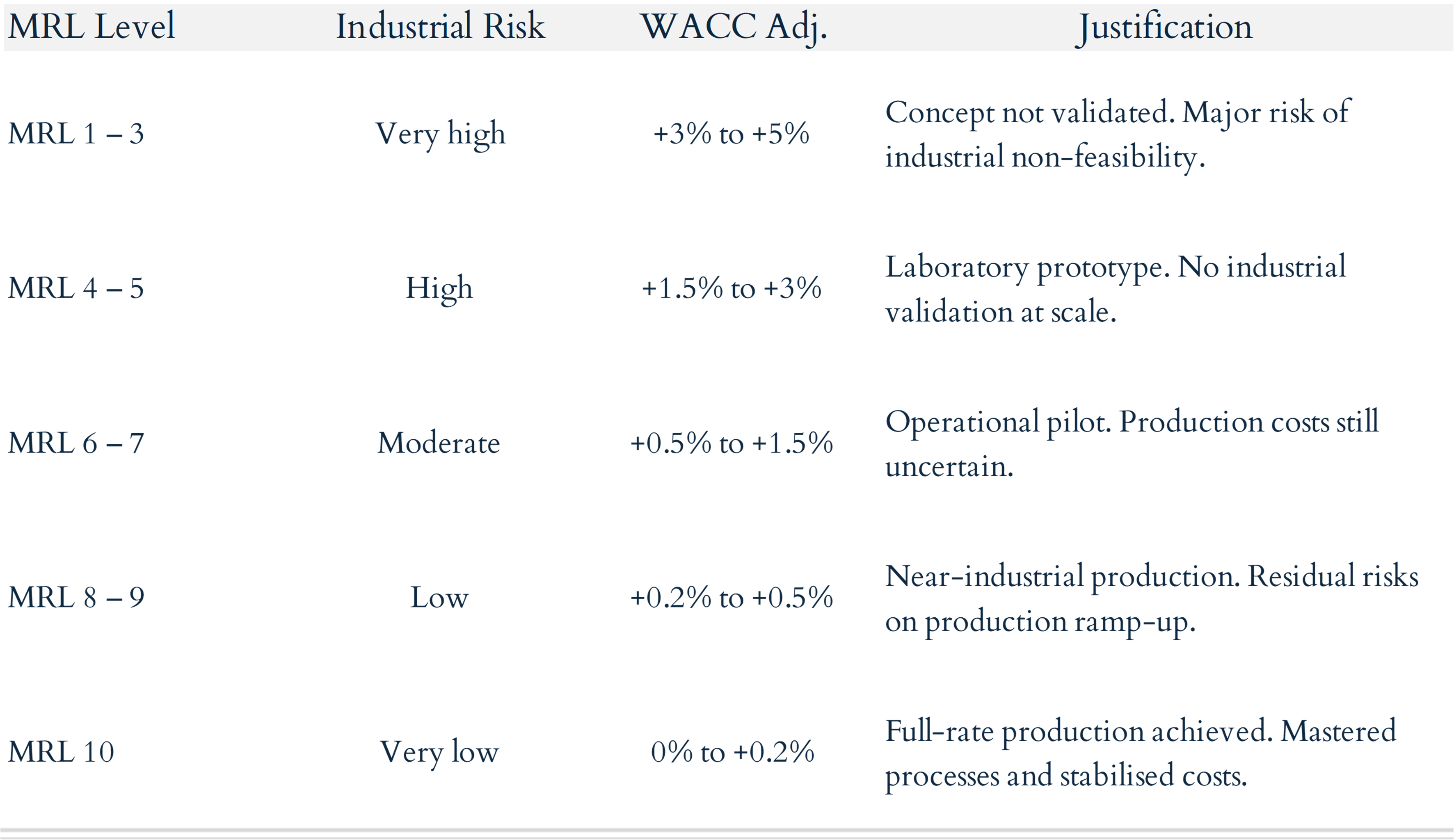
These adjustments must be applied dynamically in the DCF model: the premium is at its maximum during the early years of production ramp-up, then decreases progressively as MRL progression is demonstrated and documented. A sensitivity analysis across several MRL progression scenarios — optimistic, central, and pessimistic — is recommended to frame the residual uncertainty.
Step 4: Impact on Cash Flows
Beyond its effect on the discount rate, the MRL directly influences projected cash flows. A low MRL level translates into higher industrialisation CAPEX, unit production costs above targets (linked to the learning curve and inefficiencies of not-yet-optimised processes), extended timelines before commercial revenue generation, and a risk of budget overrun on qualification and serial production phases. The evaluator must ensure that the business plan assumptions faithfully reflect these industrial constraints, rather than the optimistic projections sometimes presented by target management.
Integrating the MRL into the Weighted Average Cost of Capital and the Valuation Model
Having established the correspondence between industrial maturity level and manufacturing risk intensity, the central question becomes methodological: how can the Manufacturing Readiness Level be concretely integrated into a financial valuation model without altering the theoretical coherence of the framework adopted?
The objective is not to substitute the MRL for existing financial models, but to use it as a structuring factor enabling a more refined assessment of the specific risk linked to an asset's industrial production capability.
Articulation with the CAPM / MEDAF Model
The Capital Asset Pricing Model (CAPM), formalised by William F. Sharpe (1964), John Lintner (1965), and Jan Mossin (1966), is based on the following relationship:
Ke = Rf + β (Rm − Rf)
where:
- Rf represents the risk-free rate,
- β measures sensitivity to market risk,
- (Rm − Rf) corresponds to the market risk premium.
This model captures systematic risk, but does not account for specific risks linked to the industrial maturity of an asset in the industrialisation phase.
In projects with significant industrial content — deep tech startups, spin-offs in production ramp-up phases, pharmaceutical assets undergoing process validation — a significant portion of uncertainty is independent of market fluctuations.
It relates to the probability that manufacturing processes will be validated at scale, that the supply chain will be secured, that production yields will reach target levels, or that industrialisation CAPEX will remain within planned budgets. As industrial valuation practice emphasises, a high MRL indicates a demonstrated ability to produce reliably and competitively, substantially reducing execution risk and enabling a progressive normalisation of financial assumptions.
Introduction of a Specific Industrial Premium (MRL)
The integration of the MRL into the cost of capital can be expressed by adding a specific premium linked to residual industrial risk:
Ke_adjusted = Rf + β (Rm − Rf) + α_MRL
The α_MRL premium reflects the intensity of residual industrial risk as assessed in light of the manufacturing maturity level of the asset being evaluated. It is conceptually distinct from the technological risk premium (α_TRL) in that it concerns not the scientific feasibility of the technology, but its ability to be produced industrially, repeatably, and economically viably.
This approach respects the theoretical structure of the CAPM while recognising that an industrially immature asset presents an additional risk not captured by the sector beta — which reflects the market volatility of comparable companies whose manufacturing processes are, by assumption, already established.
It should be noted, however, that this premium does not constitute an automatic adjustment. It must be:
- Sectorally contextualised — premium levels vary significantly depending on whether the asset belongs to the pharmaceutical, aerospace, energy, or industrial technology sector;
- Justified by a documented industrial audit — MRL assessment cannot rest solely on management's own declarations;
- Consistent with the cash flow assumptions — the premium must decrease as the MRL progresses and production assumptions become more reliable.
Integration into the WACC
In a company valuation, the weighted average cost of capital is calculated as follows:
WACC = (E/V) × Ke + (D/V) × Kd × (1 − T)
The adjustment of the cost of equity via the MRL premium mechanically influences the WACC and, consequently, the present value of future cash flows in the DCF model.
The impact is all the more significant when:
- the financial structure is predominantly equity-financed — a typical situation for deep tech startups and companies in the industrialisation phase;
- industrial maturity is low — MRL levels 1 to 5 generate the highest premiums;
- the discounting period is long — the compounding effect of discounting exponentially amplifies the impact of any rate variation.
Thus, a moderate variation in the cost of equity can generate a substantial difference in valuation, particularly for assets whose significant cash flows are deferred five years or more — which is precisely the profile of the majority of industrial assets in the industrialisation phase.
A key methodological point distinguishes MRL integration from TRL integration: the MRL premium must be modelled in a dynamic and decreasing manner over time, reflecting the progressive reduction in industrial risk as the asset advances along the MRL scale. In practice, this involves constructing several MRL progression scenarios — optimistic, central, pessimistic — and applying to each period the premium corresponding to the projected MRL level, rather than a static premium over the entire duration of the plan.
Worked Example: Integrating the MRL into the Cost of Capital
The table below illustrates, for pedagogical purposes, the indicative impact of the industrial maturity level (MRL) on the cost of equity and, consequently, on the valuation of three distinct types of industrial assets: a pharmaceutical production asset (API), a deep tech startup in hydrogen mobility, and an advanced manufacturing line.
Projected cash flows are kept constant to isolate the sole effect of the industrial risk adjustment. The observed valuation differences result exclusively from the modification of the discount rate through the integration of the specific MRL premium.
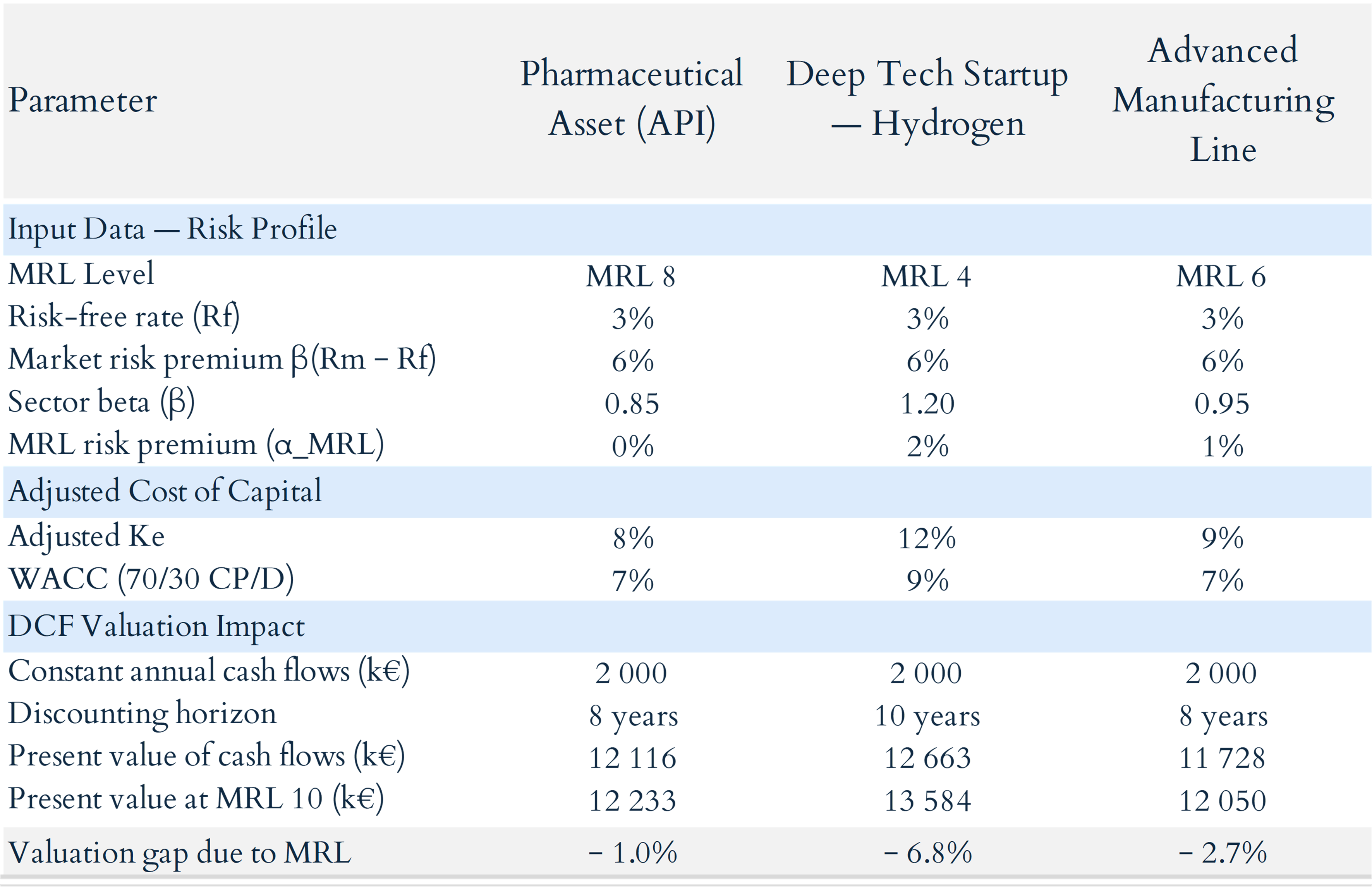
The progression of MRL reduces the specific premium and mechanically lowers the cost of equity. This decrease has a cumulative effect on the present value of cash flows, particularly when the discounting horizon is long and the financing structure predominantly equity-financed.
The deep tech startup in hydrogen mobility presents the largest valuation gap, at − 6.8% relative to the MRL 10 scenario. This sensitivity is explained by a combination of three factors: a long discounting horizon (10 years) that amplifies the effect of each rate point, a high α_MRL premium (+ 2.25%) reflecting the industrial immaturity of an MRL 4 where processes are only demonstrated at laboratory scale, and a sector beta of 1.20 that amplifies everything. As the literature on deep tech trajectories notes, a company may be at TRL 7 and yet remain financially fragile if its MRL is at 3 or 4 and its industrialisation trajectory remains uncertain.
The advanced manufacturing line records a gap of − 2.7% despite an already intermediate MRL 6. This effect is explained by a sector beta of 0.95 — higher than that of the pharmaceutical asset — which mechanically amplifies the impact of the MRL premium on the total cost of equity, combined with a WACC of 7.47% over an 8-year horizon.
The pharmaceutical asset at MRL 8 presents the smallest gap, at − 1.0%, consistent with an already operational pilot line and processes undergoing regulatory validation. The α_MRL premium limited to + 0.35% reflects a real but very bounded residual industrial risk — translating into a minimal valuation differential between the current stage (MRL 8) and full industrial maturity (MRL 10).
The relationship between MRL and valuation is not proportional. The DoD MRL Deskbook notes that progression between MRL levels is non-linear — the effort required to move from one level to the next varies significantly in terms of time, resources, and investments. This non-linearity has financial consequences: a premium variation between MRL 4 and MRL 6 generates a larger valuation differential than the same variation between MRL 8 and MRL 10, due to the cumulative effect of discounting on deferred cash flows.
When industrial maturity is fully established (MRL 9-10), manufacturing risk becomes marginal. Valuation then depends primarily on market parameters, commercial execution, and financing conditions — the MRL ceases to be a major determinant of valuation.
Examples and Case Studies
Case 1: Acquisition of a Deep Tech Startup in Hydrogen Mobility
As part of a valuation assignment conducted by Hectelion for a European industrial private equity fund, we were mandated to evaluate a startup specialising in fuel cell systems for heavy mobility. The company reported a TRL of 7, validated by several real-condition demonstrations on heavy-duty truck prototypes. However, the MRL audit conducted during industrial due diligence revealed an MRL level of only 4.
In practice, the manufacturing processes for ion exchange membranes had not been validated at scale, the platinum supply chain — a critical material — relied on a single unqualified supplier, and the CAPEX required to reach MRL 7 had been underestimated by a factor of 2.5 in the business plan submitted to investors. On the basis of this analysis, Hectelion recommended a WACC adjustment of 2.2 additional percentage points for the first five years of projections, a revision of projected CAPEX of €18 million additional, and the establishment of an earn-out mechanism conditional on reaching MRL 7 for 30% of the transaction price. This structuring made it possible to reach a balanced transaction, faithfully reflecting the real industrial risk of the asset.
Case 2: Valuation of a Pharmaceutical Asset in the Industrialisation Phase
During an asset valuation assignment conducted for a Swiss pharmaceutical laboratory wishing to divest an active pharmaceutical ingredient (API) manufacturing line, Hectelion carried out an in-depth MRL assessment of the production process. The asset presented an MRL of 8: the pilot line was operational, the first qualification batches had been produced, and results had been submitted to the EMA as part of the process validation dossier. The only residual risk identified concerned the qualification of a second critical solvent supplier, which was then in progress.
In this case, the MRL premium applied to the WACC was limited to 0.3%, reflecting a low but non-zero industrial risk. The final valuation, conducted using the DCF method, benefited from reliable projected cash flows from the second year of the plan, consistent with the advanced stage of industrial maturity of the asset. The buyer was able to commit to a fixed price without a post-closing price adjustment mechanism, thanks to the robustness of the MRL dossier presented in due diligence.
Advantages and Limitations of the MRL
The Contributions of the MRL to Financial Evaluation
The primary contribution of the MRL is to make visible and quantifiable a risk that, without it, would remain subjective and often underestimated: industrial risk. By providing a common language and a structured assessment framework, it enables stakeholders from different cultures — engineers, financiers, lawyers, investors — to share a homogeneous understanding of an asset's maturity stage and its associated residual risks. This is a necessary condition for the quality of dialogue between parties in an M&A transaction or an industrial fundraising.
Furthermore, the MRL provides an objective basis for structuring pricing mechanisms in transactions. Earn-outs conditional on reaching precise MRL milestones, liability guarantees covering industrialisation costs, or price adjustments linked to MRL progression between signing and closing are all mechanisms that the MRL makes justifiable and enforceable. It thus contributes to reducing the information asymmetry between seller and acquirer, and to aligning their interests on post-acquisition industrial success.
Limitations to Be Aware Of
The primary limitation of the MRL lies in the subjectivity inherent in its assessment. In the absence of an independent industrial auditor, management teams naturally tend to overestimate their maturity level. This difficulty is amplified by the heterogeneity of level transition criteria across sectors: an MRL 7 in the aerospace industry does not cover the same reality as an MRL 7 in medtech or consumer electronics.
A second limitation relates to the linear and uniform nature of the scale. The MRL assumes a sequential progression of industrial maturity, whereas the reality of industrialisation projects is often more complex: certain sub-systems may reach MRL 8 while others remain stuck at MRL 4, without the overall scale accounting for this internal heterogeneity. Finally, the MRL measures neither market demand nor the commercial competitiveness of the product: an asset reaching MRL 10 may nonetheless prove insufficiently profitable if the anticipated market volumes do not materialise.
CEO Message
The MRL is, in my view, one of the most underutilised indicators in the valuation and due diligence processes on which we are regularly engaged. Too often, financial evaluations of industrial or deep tech assets focus on the technological dimension — the TRL — leaving in the shadow the yet decisive question of scalable manufacturability. Yet, in a large proportion of the transactions in which Hectelion is involved, it is precisely the industrial risk that constitutes the main source of uncertainty on value.
When we deploy the MRL in our analyses, it is after having assessed its relevance in light of the asset's characteristics and the transactional context. The indicator is not universal and does not replace a complete financial analysis, but where it applies, it brings a depth of analysis that traditional approaches struggle to offer. Our conviction at Hectelion is that the most robust valuations are those that combine financial rigour with a fine understanding of the industrial and operational realities of the asset being evaluated.
Conclusion: The MRL, an Indispensable Standard in Industrial Valuation
The Manufacturing Readiness Level is progressively establishing itself as a reference tool for any player involved in the valuation, acquisition, or financing of companies with significant industrial or technological content. By offering a structured and standardised analytical framework for manufacturing risk, it addresses a major gap in traditional valuation approaches, too often focused exclusively on the technological dimension.
Its integration into WACC calculations, DCF models, and industrial due diligence processes enables more precise valuations, better-calibrated transactional structures, and a more equitable risk allocation between parties. As deep tech assets, energy transition projects, and industrial spin-offs take an increasingly prominent place in investor portfolios, mastery of the MRL represents a differentiating competency for financial advisers and investment teams.
The MRL is not yet another indicator in the financier's toolbox: it is the missing link between the technological performance of an asset and its industrial economic viability.
Professional Training – Mastering Patent Valuation
Hectelion offers a training dedicated to patent valuation, covering the conceptual framework, valuation methods, and practical implementation.
👉 [Learn more about the training]
Author:
Aristide Ruot, Ph.D.
Founder | Managing Director